




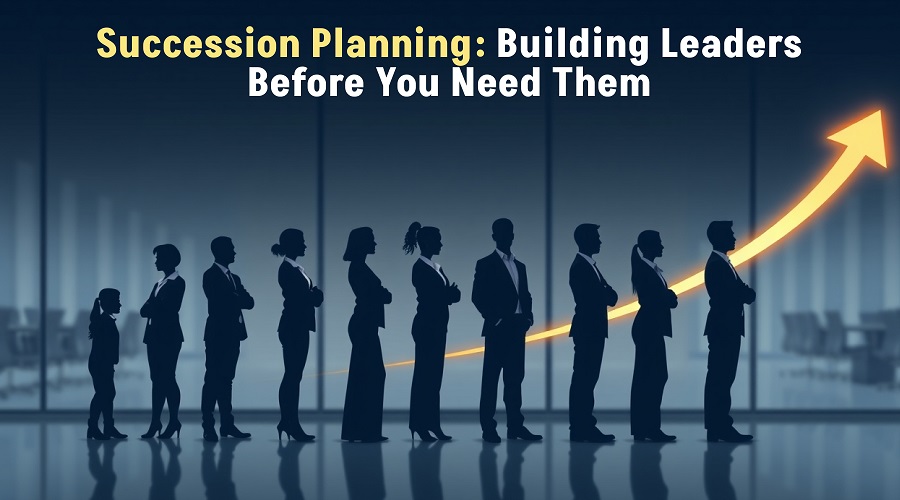
Ever thought about why some companies can keep working even when their top leaders are gone, while others can’t? This can indeed happen because of succession planning. An organization can function optimally, regardless of the absence of key leaders, because of succession planning at work. The organization is agile enough to strategically incorporate succession planning and succession preparedness about key leadership positions in the organizational structure.
This is a clear indication of the organization’s capacity to prosper, and its operational proactiveness instead of reactivity and disruptive. Through my consultancy work with small businesses and my experience with start-ups, I would like to share some of my observations regarding the relationship between organizational leadership flexibility and workgroup resilience and agility.
What Is Succession Planning (And Why It’s So Important)
As succession planning ensures leadership continuity, it involves identifying individuals, training, and equipping them to fill key positions before it becomes urgent. This is not limited to chief executives; it also includes project leaders, departmental heads, and even unanticipated technical personnel who might exit and create operational disruption. Organizations commended for effective succession planning retain 1.5 times more employees and maintain engagement, according to the Society for Human Resource Management (SHRM, 2023).
This is likely because employees perceive opportunities for advancement and development, which engenders loyalty.
Why You Should Care (Even If You’re Not the Boss)
With any new management there is bound to be new challenges. When the captain of a cricket team is lost during a tournament and there is no trained vice captain, the team collapses. It’s no different with any business. Succession planning will identify an employee who, in the future, will be required to assume the responsibilities of the business. Empowering employees to take control of their own destinies is also about democratizing decision making.
People will work harder when they know there is a ladder to climb. If you’re an employee and reading this, succession planning is the perfect time to tell management, “I’ve got what it takes to help lead next.
The Step-by-Step Guide to Succession Planning
Here’s how you can make it happen, without the jargon:
1. Identify Critical Roles
List positions vital to the continuity of business functions such as leadership, finance, operations, sales, etc. These are the positions likely to inflict the most damage if they are vacated.
2. Identify Possible Successors
Identify the top performers. These are individuals who consistently deliver results, collaborate well with others, and rapidly demonstrate learning abilities. To quote the former CEO of GE, Jack Welch, “Before you are a leader, success is all about growing yourself. When you become a leader, success is about growing others.”
3. Talent Development
Training is the most important aspect of developing talent. Provide real experiences as training, rather than solely in training slides. Mentorships, job rotations, and challenging assignments are a few to consider.
4. Readiness Testing
Design leadership scenarios and let mini leaders supervise little teams or manage mini projects. This will help both sides gauge readiness for larger responsibilities.
5. Revise and Update
Expect growing, changing, and shifting business objectives to include market and people advancement. Succession planning changes with lost objectives, evolving business goals, and shifting markets.
Real World Example: Apple’s Smooth Leadership Transition
Do you recall when Tim Cook became CEO after Steve Jobs? That transition wasn’t a surprise. Jobs had been grooming Tim Cook for the position, mentoring him and passing on Apple’s vision and core values. The result? Apple not only continued to be successful, but it became even more successful. That’s good succession planning. Now observe successful companies that suddenly lose their visionary leaders. Their growth routinely stalls or, even worse, declines. Leaving a legacy and encountering a loss hinges on planning.
Common Mistakes (And How You Can Avoid Them)
- Not paying attention to mid-level jobs: Leadership deficits frequently start small. Don’t only train people at the top; train them at every level.
- Playing favorites: Don’t let personal chemistry affect your decisions; instead, look at merit and potential.
- Taking too long: The optimum time to plan for succession was yesterday.
- Not talking: Being open keeps spirits high and stops rumors from spreading.
Conclusion: Future-Proofing Your Legacy
Anticipation isn’t predicting the future. It is being ready for it. Planning is a sign of strength not weakness. No matter if it is a family business or a startup, investing time in grooming future executives is probably the smartest thing to do.
In this scenario, you are not just filling empty slots. You are creating a powerful system that sustains growth, harmony, and trust. So the time is now. The future leaders of your organization are already in your company. All they require is a plan and the trust to execute it.
If you are a researcher and research a topic like Succession Planning: Building Leaders Before You Need Them, strengthen your study with well-structured insights supported by thoughtful Bibliometric analysis and refined through expert PhD Dissertation Help. Build a thesis that truly contributes to leadership development and organizational continuity.
Comments