




Learning guitar usually starts with excitement. You imagine yourself playing songs, strumming confidently, maybe even singing along. But very quickly, reality hits, sore fingers, awkward hand shapes, and chords that don’t sound anything like the songs you love.
The D major chord is often one of the first moments where beginners pause and think, “Why does this feel harder than it looks?”
And that’s completely normal.
This chord may be small, but it plays a big role in helping you become a real guitarist. Not just someone holding a guitar, but someone who understands control, clarity, and patience.
Why the D Major Chord Matters
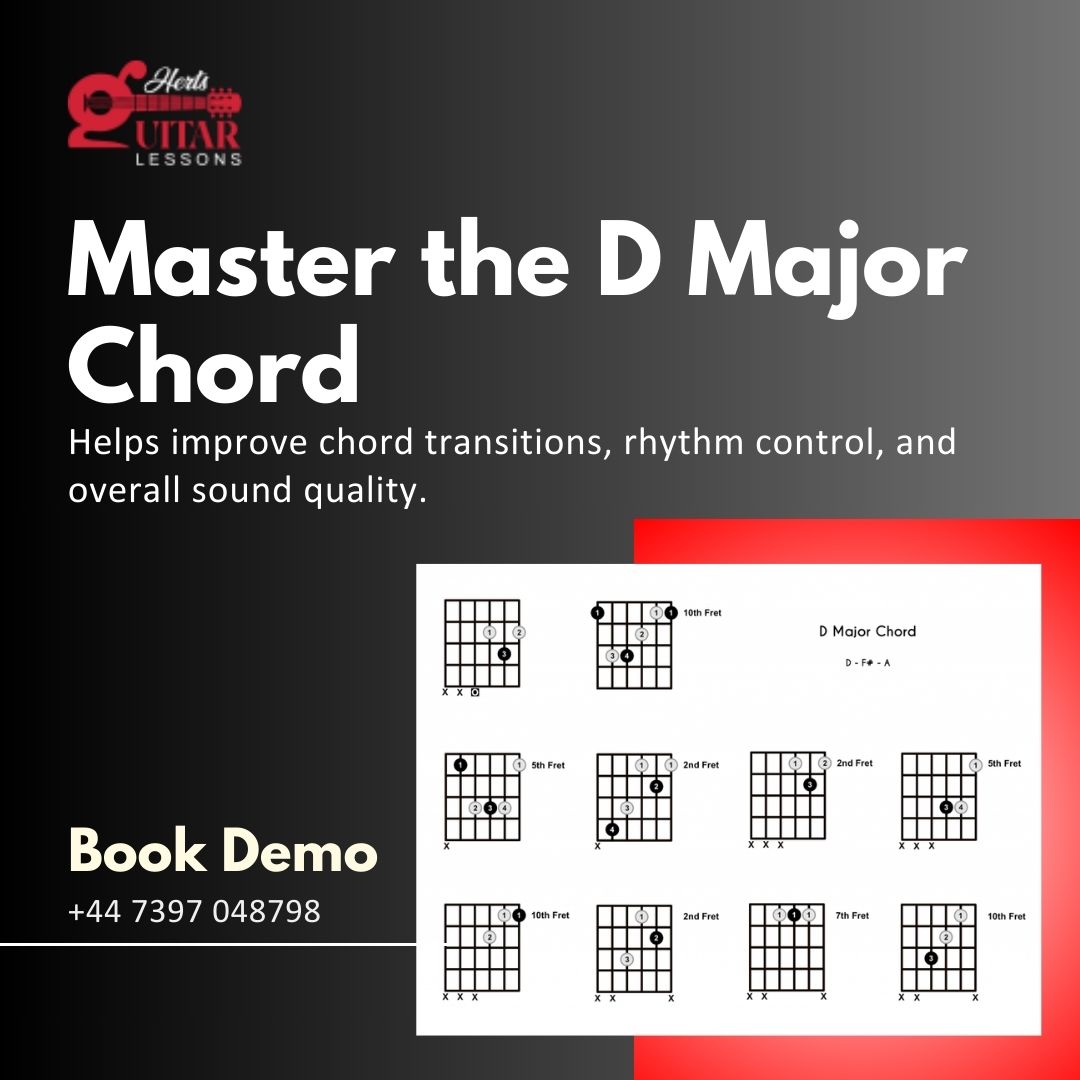
The D major chord is more important than many beginners realise. It isn’t just another shape to memorise, it teaches you how your fingers should work together on the fretboard.
Unlike open chords that spread your fingers wide, D major brings them close. This forces accuracy. It trains your fingertips to land cleanly without touching nearby strings. Over time, this control becomes useful for almost every chord you’ll learn later.
You’ll also notice that D major appears constantly in beginner-friendly songs. It fits naturally with chords like G, A, and Em, which is why so many popular progressions depend on it. Once you feel comfortable with D major, suddenly dozens of songs feel playable instead of impossible.
In many ways, this chord quietly prepares you for everything that comes next.
The Honest Truth About Learning It
Most people don’t struggle with guitar because they lack talent. They struggle because progress doesn’t happen instantly.
The D major chord is usually the first chord that demands patience. Your fingers might feel cramped. Your wrist might feel confused. You might strum and hear buzzing, muted notes, or uneven sound.
That frustration doesn’t mean you’re doing something wrong. It simply means your hands are learning a brand-new skill. Playing guitar is not natural at first — it’s learned movement. And learned movement takes repetition, not perfection.
Every guitarist you admire once played a terrible-sounding D major chord. They just kept going.
What Helps (Really Helps)
When learning D major, small habits matter more than long practice sessions.
Playing slowly allows your fingers to understand where they belong. Checking one string at a time helps your ears learn what “clean” actually sounds like. Making tiny adjustments — even moving a finger a few millimetres — can completely change the tone.
It’s also important not to press too hard. Many beginners squeeze the neck, thinking pressure equals clarity. In reality, relaxed fingers with correct placement work far better.
Progress often feels invisible day to day. But after a week of consistent, calm practice, your hand suddenly feels more comfortable — and the chord starts ringing naturally.
When It Clicking Feels Like Magic
There’s a moment every guitarist remembers.
You place your fingers like usual. You strum without expecting much. And suddenly — it sounds right.
The chord rings clearly. No buzz. No dead strings. Just music. That moment doesn’t come from luck. It comes from repetition quietly working in the background. Your fingers finally understand what they’ve been practicing.
For many learners, this is the point where guitar stops feeling like a struggle and starts feeling enjoyable. It’s when confidence begins to grow — not loudly, but steadily.
Where You’ll Hear D Major Everywhere
Once you recognise the sound of the D major chord, you’ll begin hearing it everywhere.
It appears in acoustic ballads, pop songs, worship music, folk tunes, and classic rock. It’s often used to lift emotion, add brightness, or mark a change in a song’s mood.
Many beginner songs rely on D major because it sits comfortably on the guitar and blends beautifully with common strumming patterns. This makes it ideal for singing along, jamming with friends, or simply enjoying solo practice.
Understanding this chord helps you connect technique with real music — which is exactly what learning guitar should be about.
Learning Is Better With Support
Trying to learn guitar alone can feel confusing. You may practice regularly but still feel unsure whether you’re improving or repeating the same mistakes.
That’s where guidance makes a huge difference.
A teacher can spot issues you might never notice — finger angle, wrist position, or strumming motion. Often, one small correction can fix weeks of frustration.
At Herts Guitar Lessons, students are guided through chords like D major in a calm, supportive way. The focus isn’t rushing through lessons, but building confidence step by step. Whether learning in Hertfordshire or online, the goal is always the same: help students enjoy playing instead of feeling stuck.
You can explore lesson options here: https://www.herts-guitar-lessons.co.uk/contact-us/
Final Thoughts
The D major chord may seem simple, but it teaches you some of the most important lessons in guitar playing — patience, accuracy, and trust in the process.
You won’t master it in one day. And that’s okay.
Each time you practice, your fingers learn a little more. Each clean strum brings you closer to sounding the way you imagine.
Stick with it.
Because one day, without even noticing, you’ll play the D major chord — and it will feel completely natural.
Comments